
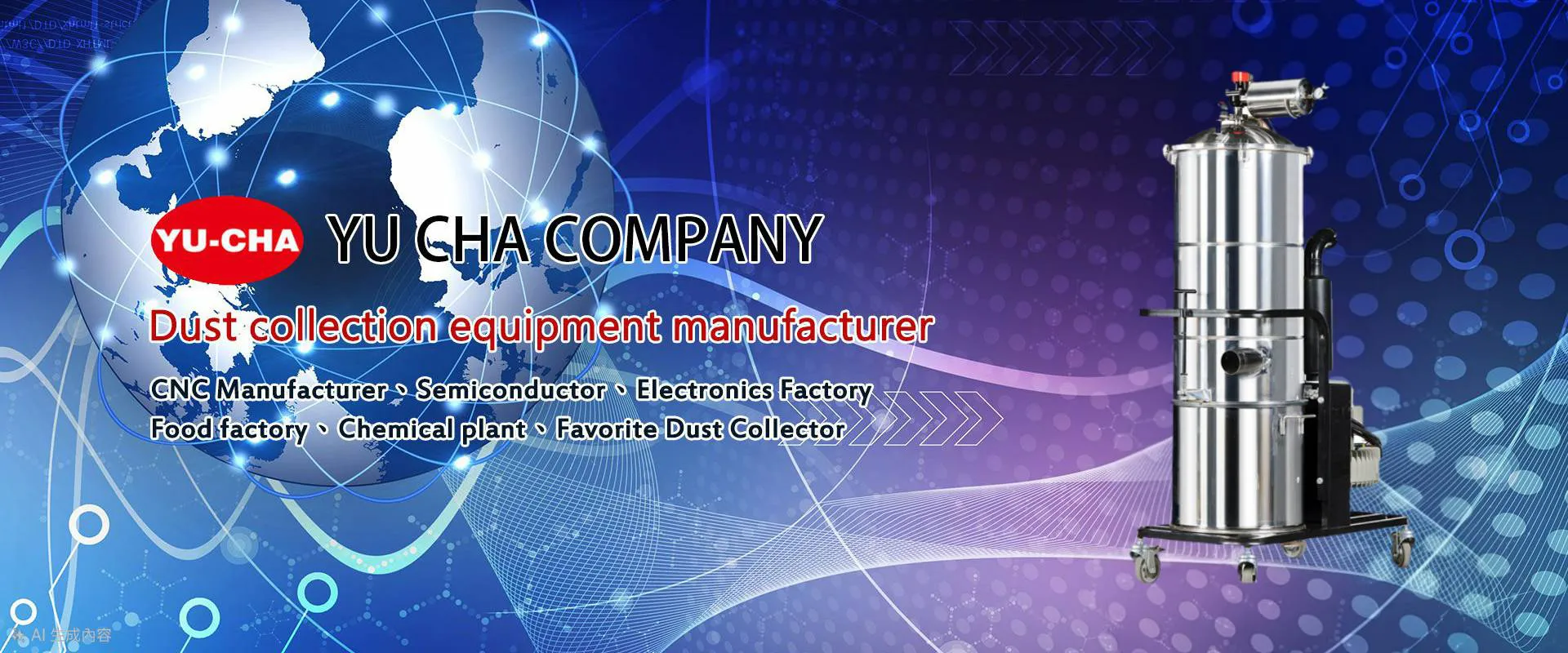
19.Essential HACCP/TQF Compliance: YU-CHA Stainless Steel Dust Collection & Powder Recovery Systems
To meet the stringent HACCP and TQF audit standards of modern food processing facilities, a food-grade stainless steel dust collection system is critical infrastructure. It prevents cross-contact contamination and maintains a hygienic, dust-free environment. Designed for extreme sanitary requirements, these systems utilize SUS304 or SUS316 medical-food-grade stainless steel. Combining advanced aerodynamics with high-efficiency filtration, they actively intercept micro-particulates like flour, sugar, milk powder, and various food additives. Featuring YU-CHA’s seamless welding and explosion-proof designs, this system not only eradicates dust explosion hazards on the production line but also enables zero-contamination recovery of high-value raw materials. This ensures your production workflows are 100% compliant with global food safety regulations while drastically reducing food safety risks.
Regulatory Compliance & Architecture of Food-Grade Dust Collectors
In the food processing industry, "dust collection" goes beyond simple housekeeping; it is the cornerstone of Quality Control (QC) and process safety. Standard industrial dust collectors cannot meet the rigorous microbial control demands of food plants. Therefore, the definition and architecture of stainless steel dust collection systems possess non-negotiable specifications.
Strict Dust Control Standards Under HACCP and TQF
Both HACCP (Hazard Analysis Critical Control Point) and TQF standards mandate the elimination of physical, chemical, and biological hazards on food production lines. Airborne dust settling on adjacent lines directly causes "Cross-Contact" of allergens—a critical violation in food regulations. A compliant dust collection system must precisely control localized dust concentrations without becoming a breeding ground for bacteria. This requires high-polish internal finishes with zero dead angles and no powder accumulation zones.
YU-CHA System’s Core Materials & Compliant Design
To meet these rigorous demands, professional food-grade dust collection architectures—such as the YU-CHA equipment series—exclusively utilize SUS304 or the superior SUS316 stainless steel. Core design features include:
-
Sanitary Surface Finishes & Dismountable Design: Eliminates crevices where contaminants can hide, fully supporting CIP (Clean-In-Place) or easy-dismantle protocols.
-
Food-Grade Sealing Consumables: All gaskets and seals are manufactured from food-grade silicone or PTFE (Teflon) to prevent plasticizer leaching.
-
Customized Equipment Architecture: From the CS-350 automatic feeder and versatile CS-1111/CS-102 for localized point-source extraction to the NS-888 for large-scale central systems, all architectures maintain consistent food safety-grade engineering.
Airflow Dynamics & Food Powder Recovery Mechanics
High-efficiency powder recovery relies not just on sheer suction power, but on precise computational fluid dynamics (CFD) and material science to ensure airborne particulates are effectively captured, separated, and safely contained.
Aerodynamics and High-Efficiency Interception Mechanisms
The primary operational principle of stainless steel dust collectors is establishing a stable "negative pressure barrier." When ingredients generate fugitive dust during dumping, mixing, or packaging, the system uses precisely engineered extraction hoods to create directional airflow that pulls the dust away. Once inside, the system employs a dual-stage interception logic:
-
Cyclone Separation: Utilizes centrifugal force generated by cyclonic airflow to separate heavier particulates (e.g., grain debris, sugar granules) into the bottom collection hopper, significantly reducing the load on the filter media.
-
High-Efficiency Filtration (HEPA / PTFE): For micron-level fine powders (e.g., milk powder, starches), the system relies on filter bags or cartridges coated with PTFE. This lamination creates an ultra-smooth surface that prevents powder adhesion. Paired with an automatic Pulse-Jet cleaning system, it maintains long-term stable pressure differentials.
Combustible Dust Explosion Prevention (ATEX) & Static Elimination
This is often the most overlooked yet lethal aspect of food processing. Carbohydrate powders like flour, cornstarch, and powdered sugar can easily trigger combustible dust explosions when they reach specific concentrations in enclosed spaces and encounter static sparks. High-end stainless steel dust collection systems strictly adhere to ATEX explosion-proof directives:
-
Anti-Static Filter Media: Filter cartridges are woven with conductive yarn or feature anti-static coatings to ensure static electricity generated by internal friction is instantly grounded.
-
Equipotential Bonding & Explosion Venting: The entire chassis is equipotentially grounded and equipped with Explosion Vents or flameless venting devices. In the event of abnormal pressure spikes, these actively redirect the blast wave, safeguarding facility infrastructure and personnel.
Practical Operations & ROI in Food Processing Lines
Translating theory into actual throughput, stainless steel dust collection systems have extensive application scenarios in food manufacturing plants, directly impacting production efficiency and audit pass rates.
-
Fugitive Dust Control at Dumping & Mixing Zones
-
Scenario: At raw material Dumping Stations and large mixing vats in bakeries or nutraceutical plants, sudden ingredient drops generate high concentrations of airborne dust.
-
Benefit: Deploying equipment like the CS-1111, featuring powerful instantaneous extraction and stainless steel capture hoods, creates an "air curtain" effect that locks 100% of the dust within the dumping zone. This mitigates occupational health risks for operators and eliminates the need for labor-intensive daily cleanroom-level sanitation, directly boosting production line uptime.
-
-
Purification and Recovery of High-Value Food Powders
-
Scenario: Production lines handling probiotics, health food additives, or premium cocoa powder. These raw materials are expensive; dust lost to the air was traditionally viewed as direct profit leakage.
-
Benefit: Utilizing standalone systems (like the NS-888 large module paired with dedicated ductwork) allows for dedicated extraction and recovery of single, high-value ingredients. Because YU-CHA equipment features food-grade stainless steel internals with zero dead zones, the intercepted powder remains highly pure and hygienic. Enterprises can safely reintroduce this clean powder back into the manufacturing process, resulting in significant procurement cost savings.
-
ROI and Total Cost of Ownership (TCO) Analysis
When facing HACCP audits, enterprises evaluating an upgrade to stainless steel dust collection systems must shift from a "procurement mindset" to a long-term ROI analysis based on the Total Cost of Ownership (TCO).
H3: Initial CAPEX and Compliance Certification Costs The explicit CAPEX during the deployment phase is inherently higher than that of traditional carbon steel collectors. Primary costs include:
-
Material Premium: Material and fabrication costs for SUS304/316 stainless steel are significantly higher, particularly the labor costs associated with full continuous welding and sanitary polishing.
-
Custom Ductwork Engineering: Food-grade ducting also requires stainless steel. The piping must avoid 90-degree elbows to prevent powder buildup, increasing the complexity and cost of the layout.
-
ATEX & Safety Certifications: Equipping the system with ATEX explosion-proof motors, compliant electrical panels, and static elimination devices constitutes a high-end initial hardware investment.
Long-Term OPEX Savings and Hidden Cost Mitigation
Despite higher initial costs, the long-term Return on Investment (ROI) of a stainless steel dust collection system is excellent, primarily reflected in the mitigation of hidden OPEX:
-
Preventing Audit Failures & Downtime: A non-compliant dust collector that causes a failed TQF or HACCP audit can lead to forced shutdowns or product recalls. The resulting commercial losses far exceed the equipment's value.
-
VFD Energy Efficiency & Filter Lifespan: Modern systems equipped with Variable Frequency Drives (VFD) automatically adjust airflow based on line load. Paired with efficient pulse-jet cleaning, filter replacement cycles can be extended by 1.5 to 2 times, drastically reducing long-term consumable and energy costs.
-
Depreciation and Durability: Stainless steel resists corrosion and withstands acidic/alkaline washdowns. With a lifespan exceeding 10 years, the amortized annual cost is ultimately lower than that of cheaper equipment prone to frequent rust and failure.